
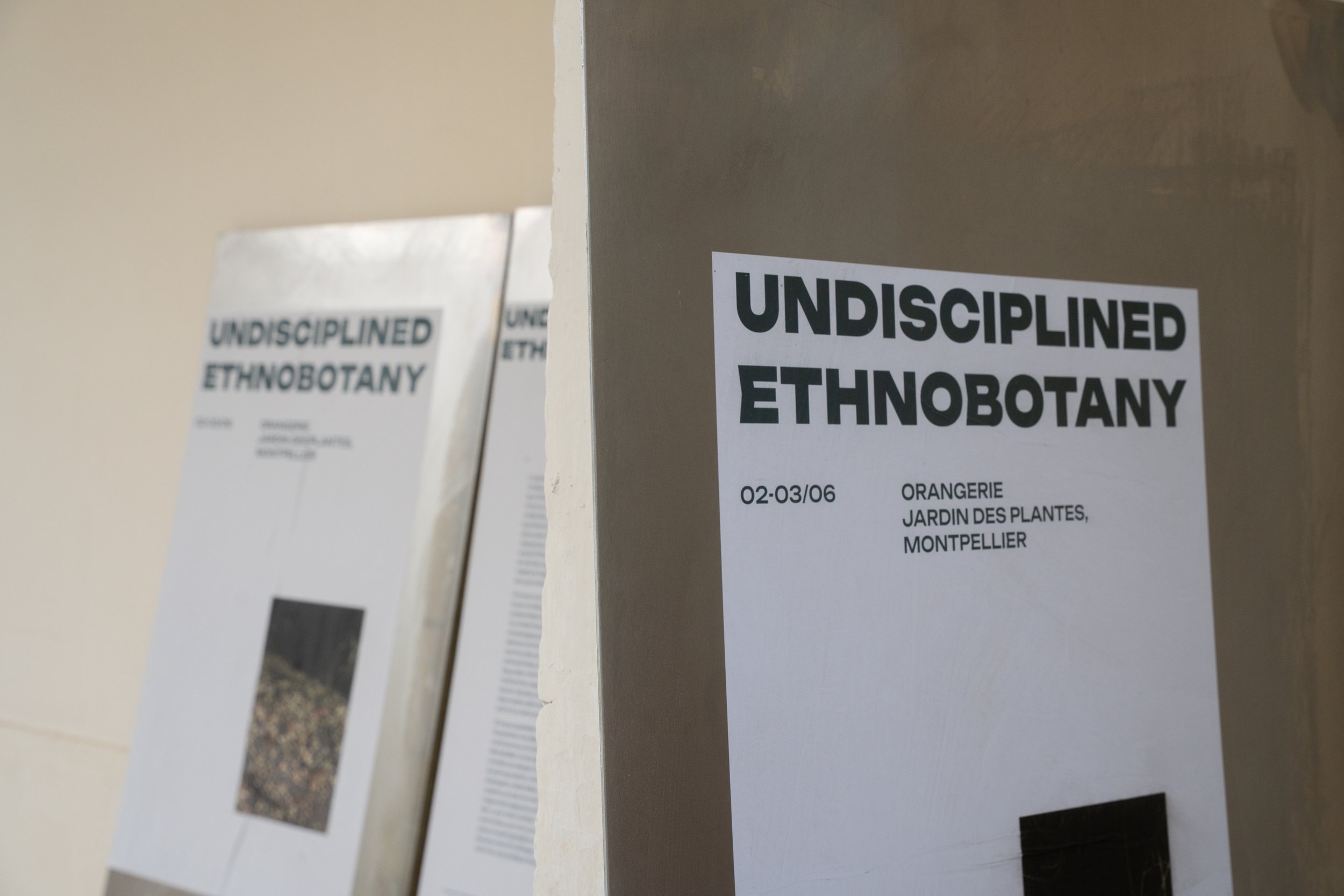
© Miguel Teodoro
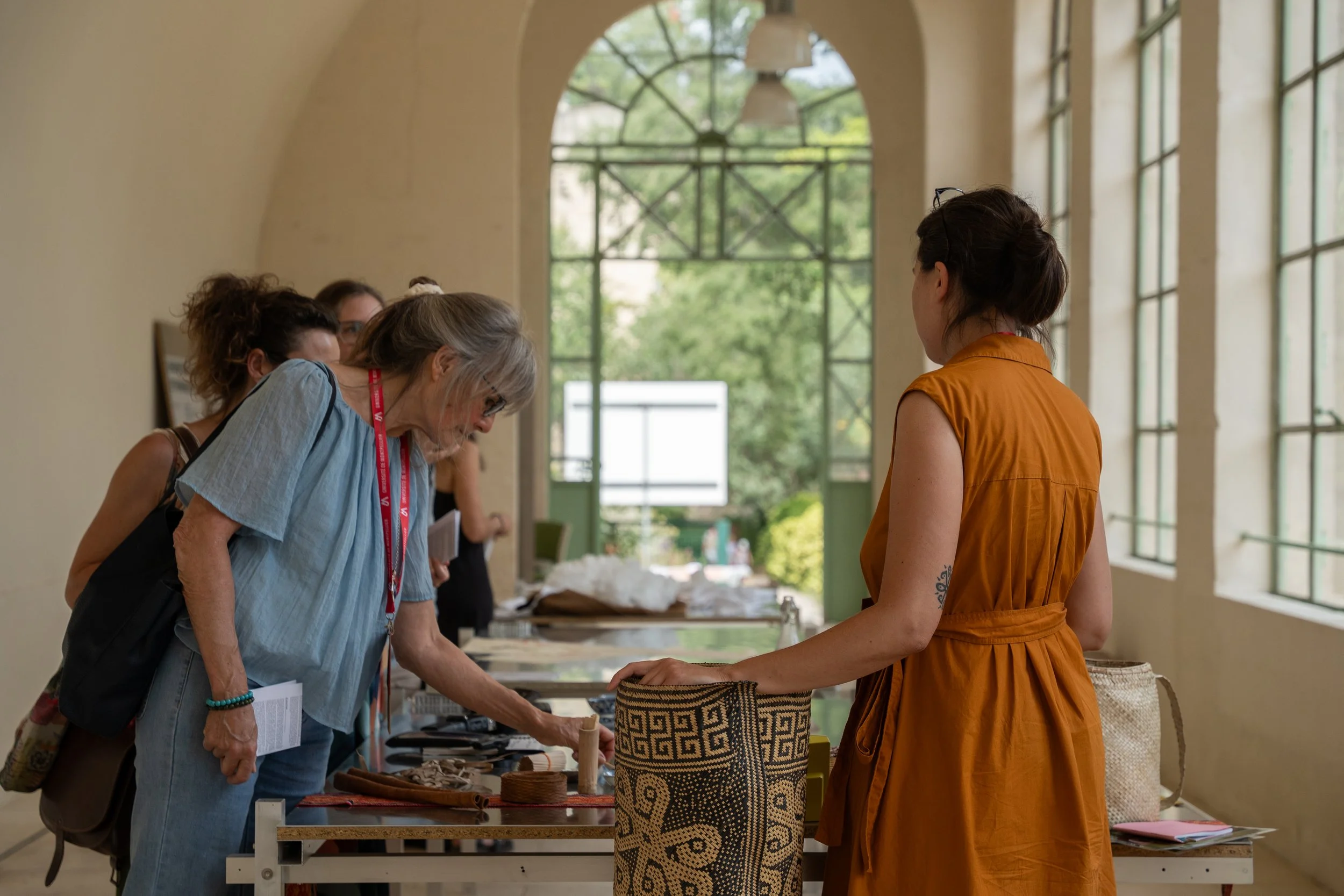
The exhibition, part of the Undisciplined Ethnobotany 2026 Society for Ethnobotany Annual Meeting, departs from the premise that ethnobotany does not belong exclusively to the domain of science, nor to the authority of institutional knowledge production. To insist on the presence of art and design is therefore not an act of undisciplinarity, but a recognition that these practices, too, participate in the study of how humans relate to the vegetal world, and how these relations shape cultures, economies, cosmologies, and futures.
Through film, image-making, textile, sculpture, sound, and embodied practices, the presented works approach plants as co-creators of our shared, entangled social, political, and ecological worlds. Rather than treating them as objects of inquiry through an extractivist gaze, the works position artistic practice itself as a research methodology: capable of producing situated forms of knowledge, affective infrastructures, and alternative modes of attention to plant-human relationships.
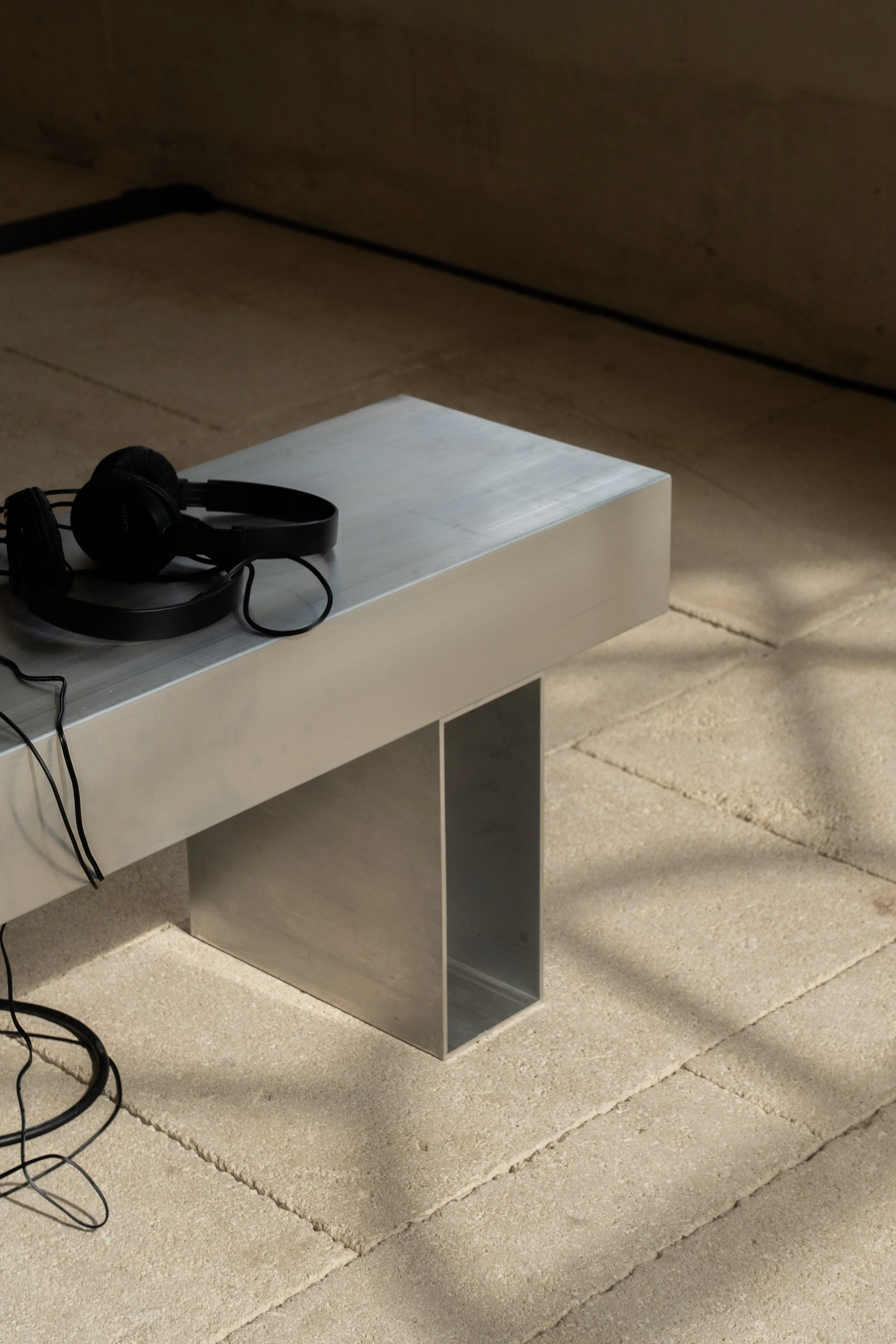
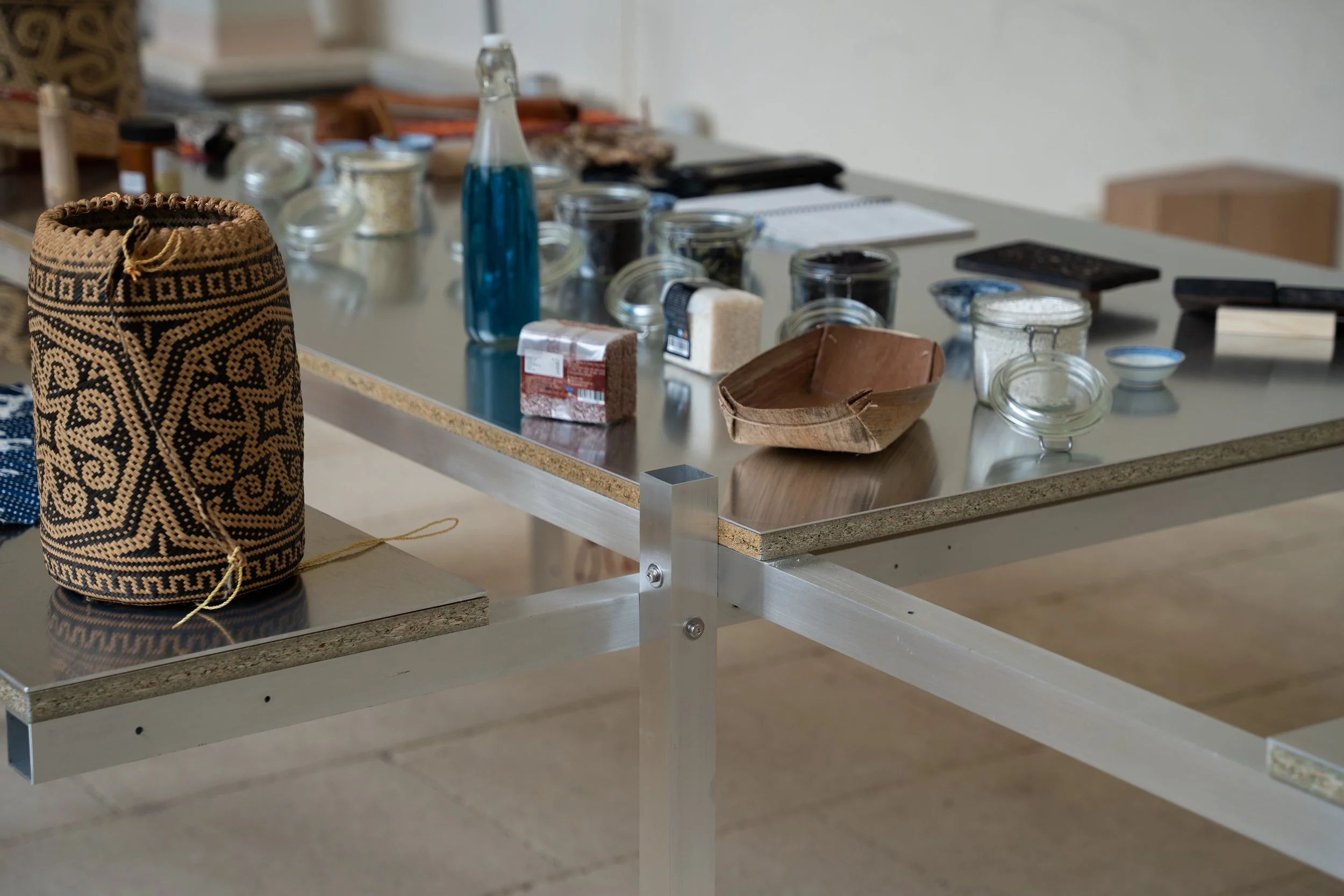
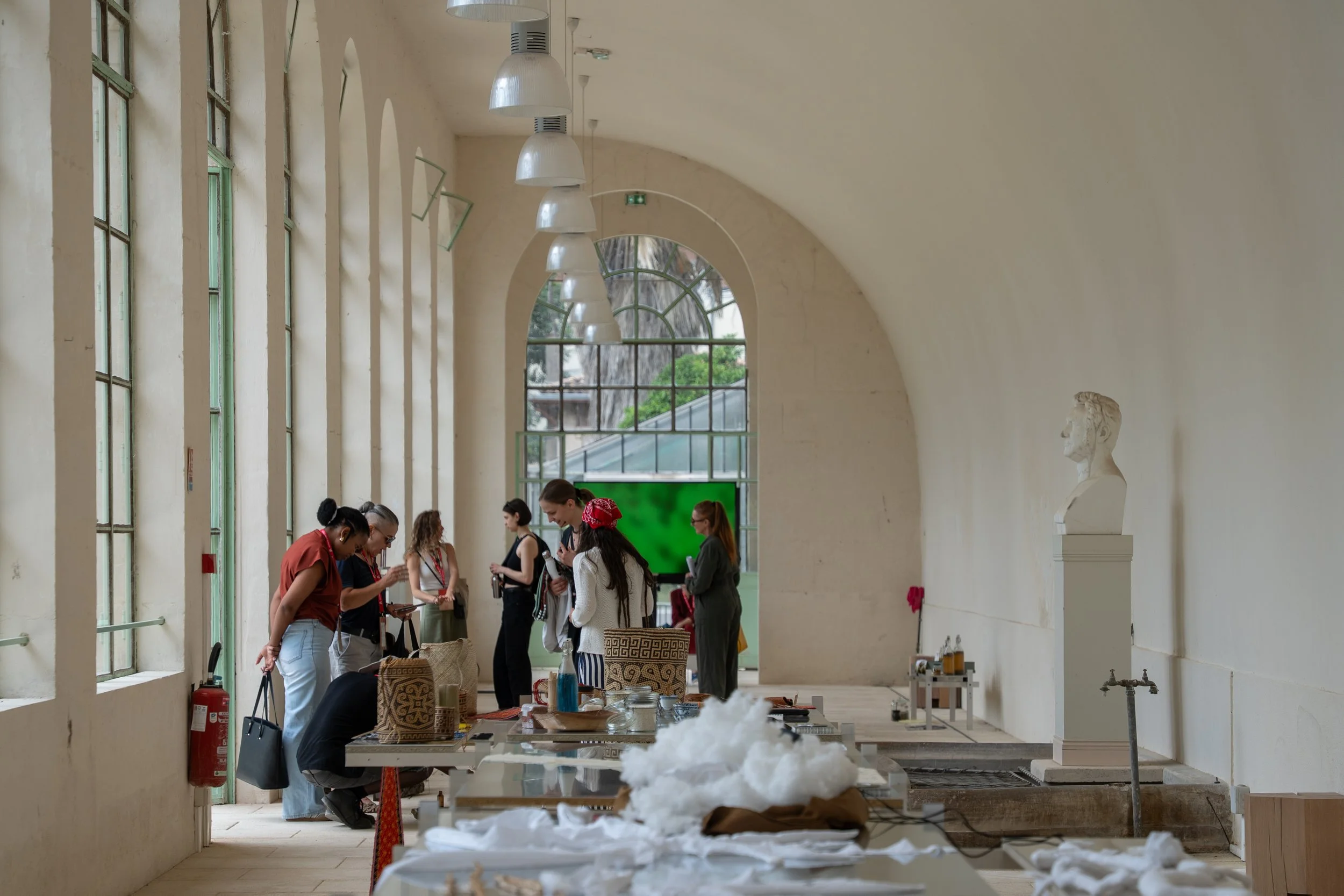
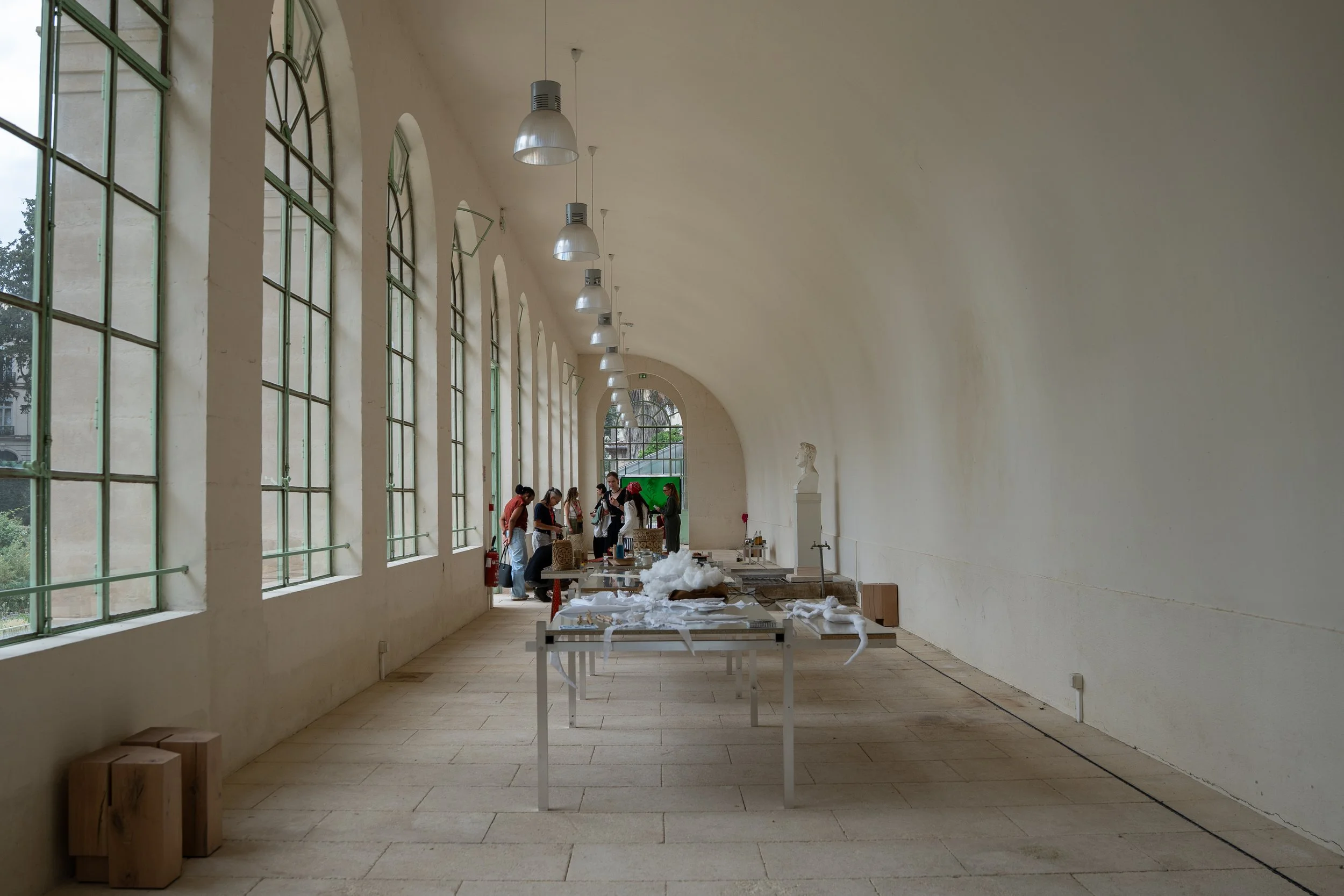
Conceived spatially by Heim+Viladrich, the exhibition unfolds as a porous and materially attentive environment. Based in Montpellier, the studio’s practice moves between object design, architecture, and scenography, often foregrounding local material ecologies, vernacular gestures, and forms of reuse that question extractive notions of production. Their intervention for the Orangerie works with the site as a living condition. In this sense, the scenography enters into dialogue with the artworks, proposing exhibition-making itself as a form of ecological and situated practice.
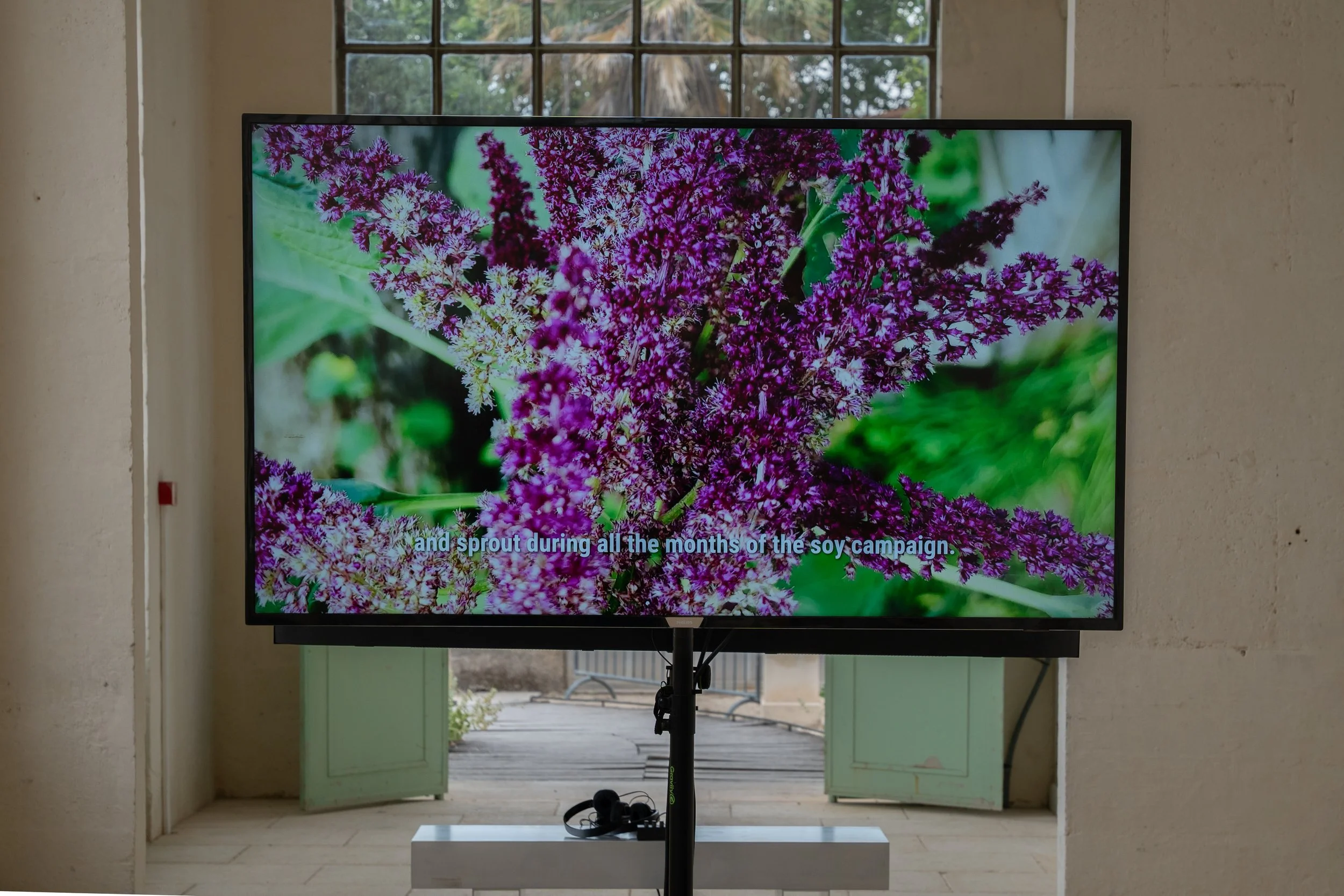
Colorado 9’15’’, 2025
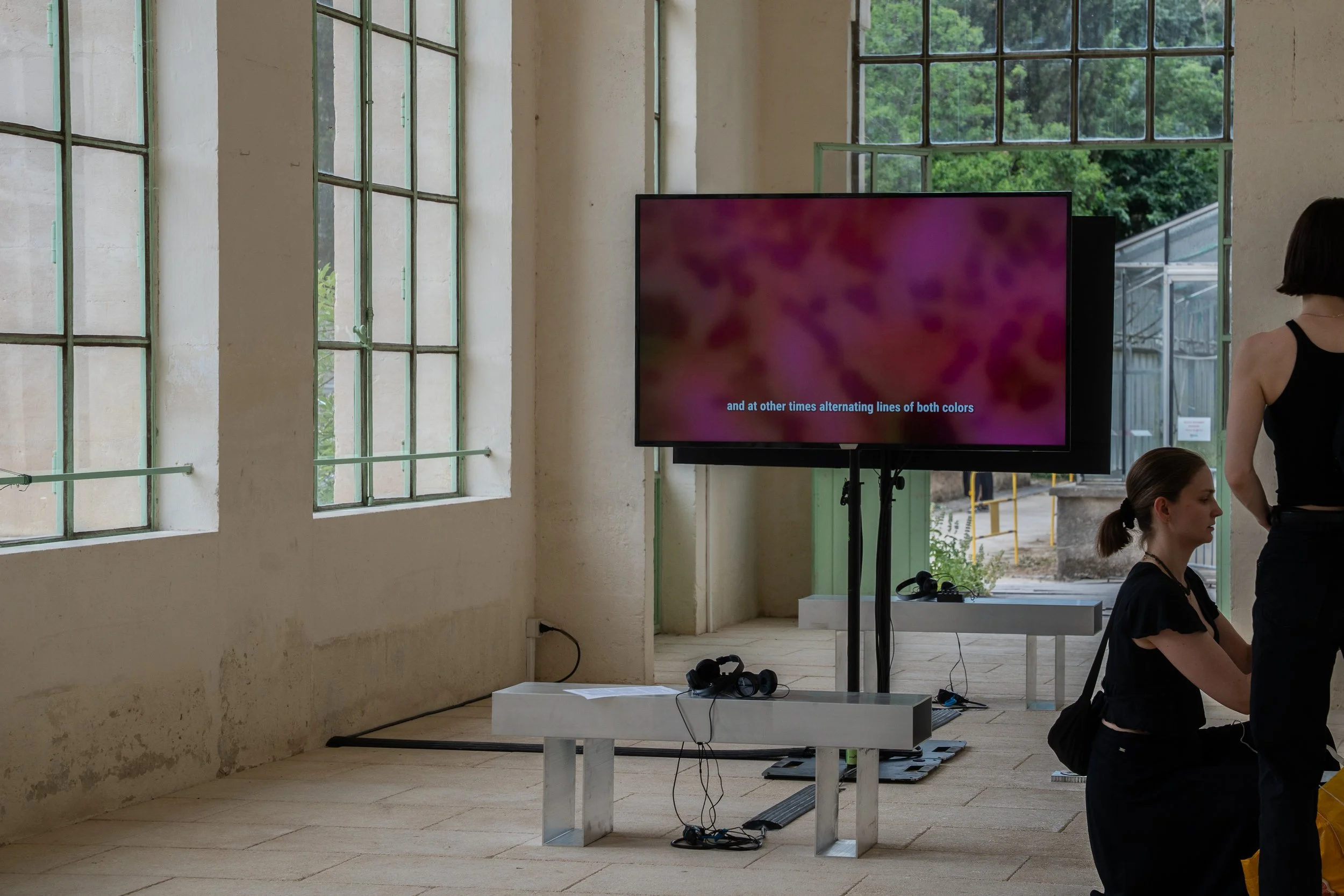
A Video Essay by Julia Mensch. SNSF research project Plants_Intelligence. Learning Like a Plant (2022-2025), Institute Art Gender Nature, FHNW Basel; Bauhaus University, Weimar
The video essay examines Amaranth's ancestral resistance and political agency. Its seeds were preserved by indigenous peoples despite prohibitions by Spanish colonizers, and today it is the most widespread glyphosate-resistant weed. It covers more than 25 million hectares of GM crops and is resistant to most agrochemicals used in transgenic agriculture in Argentina. It is known as Kiwicha, Aroma, or Yuyo Colorado. The Argentinian scientist and environmental activist Andrés Carrasco called it the revenge of America. Part of Amaranth as Political Agent. Developed within the frame of the SNF research project Plants_Intelligence. Learning Like a Plant (2022-2025). Funded by the Swiss National Science Foundation and hosted by the Institute Art Gender Nature at the Basel Academy of Art and Design FHNW.
https://plants-intelligence.ch/
—
Julia Mensch (1980, Buenos Aires) is a Swiss-Argentine visual artist based in Berlin. She studied at the Universidad Nacional de las Artes (UNA) in Buenos Aires and at the Universität der Künste (UdK) Berlin in Hito Steyerl’s class. From 2022 to 2025, she was an artistic and doctoral researcher in the SNSF-funded project Plants_Intelligence. Learning Like a Plant at the Institute Art Gender Nature, FHNW Basel, where she developed her PhD research. She is currently preparing to submit her doctoral thesis at Bauhaus University Weimar. Her practice spans text, drawing, installation, video, and lecture-performance, focusing on socialism’s history and environmental sociopolitical conflicts in Latin America.
For Every Algae Its Place Inês Quente
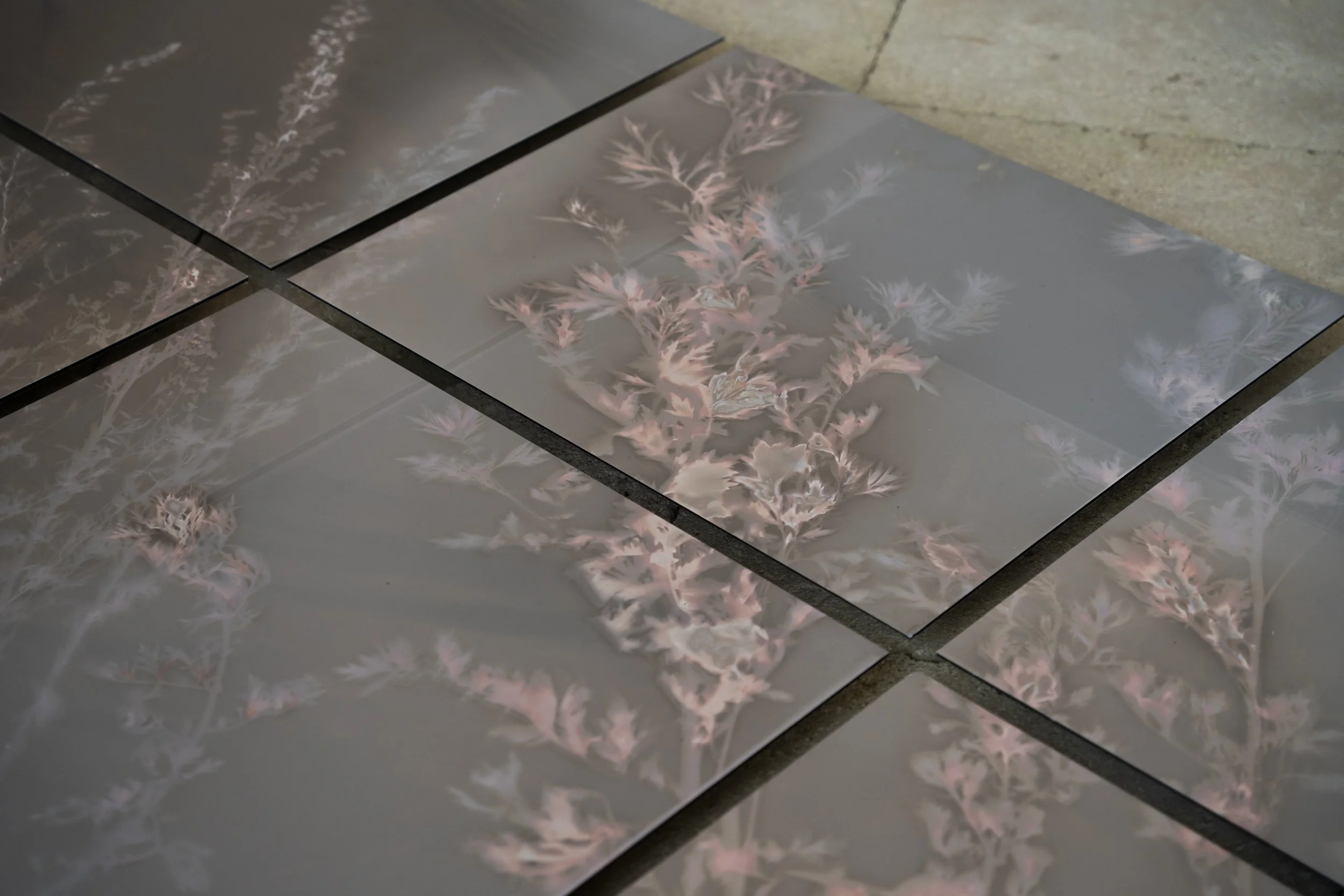
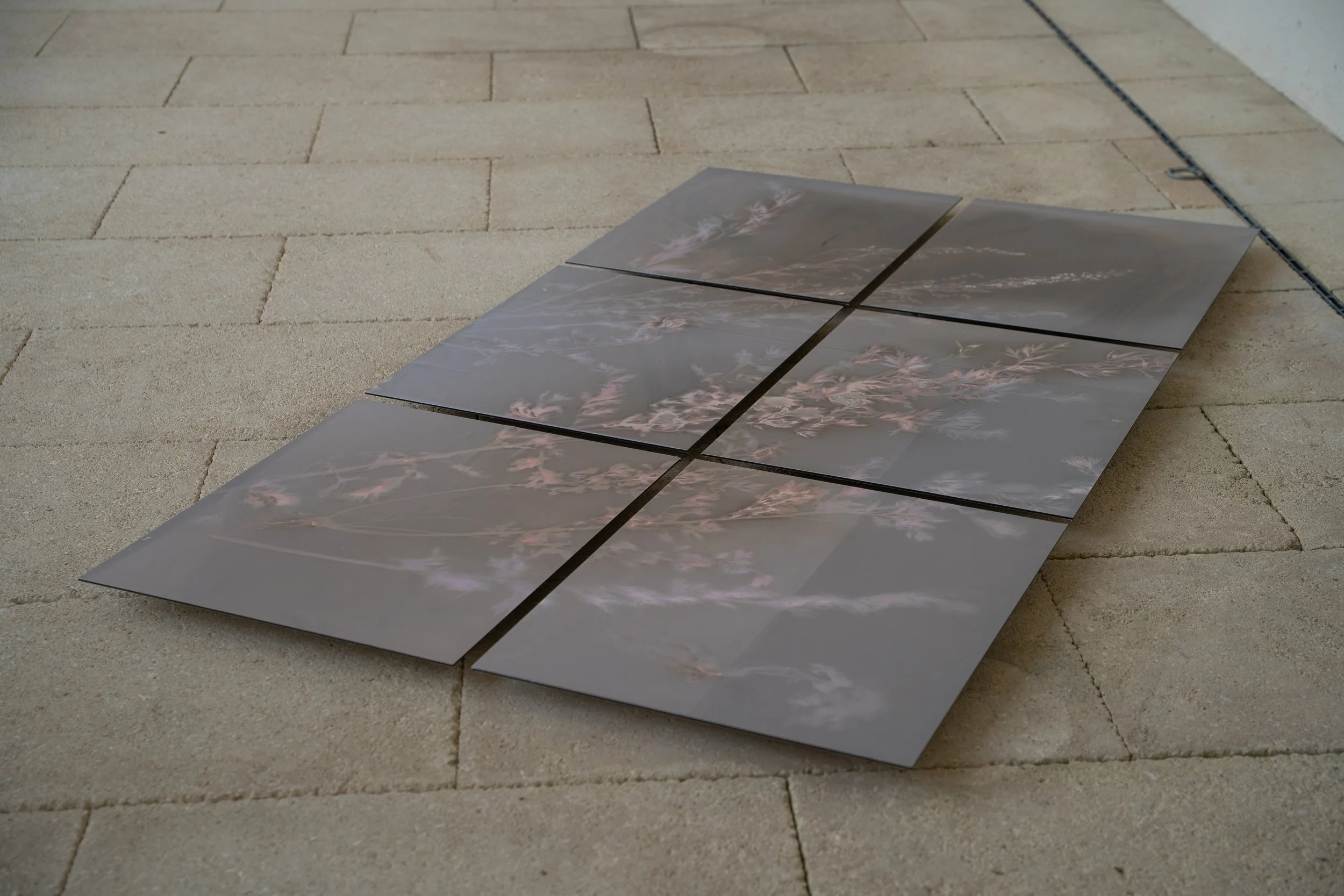
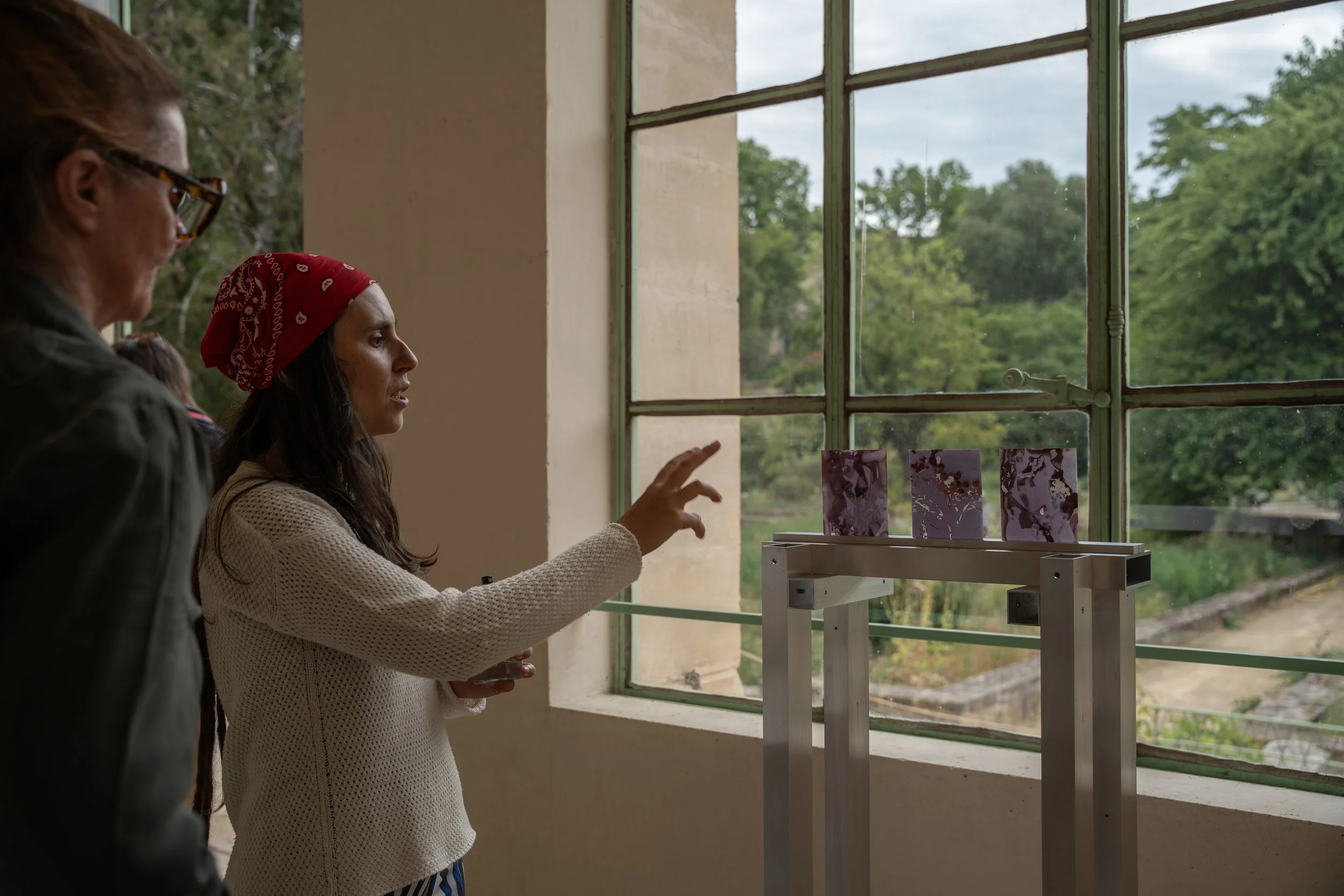
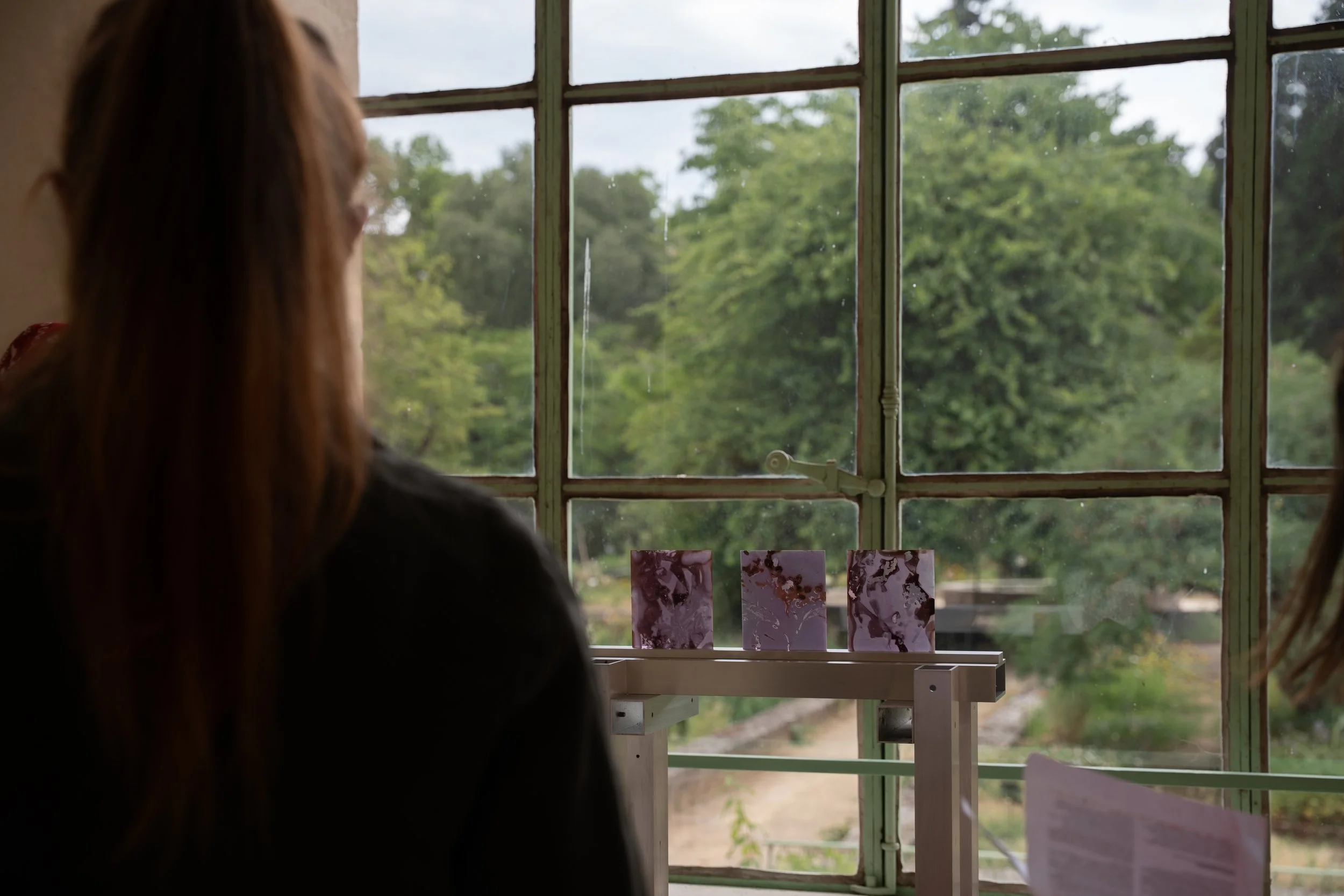
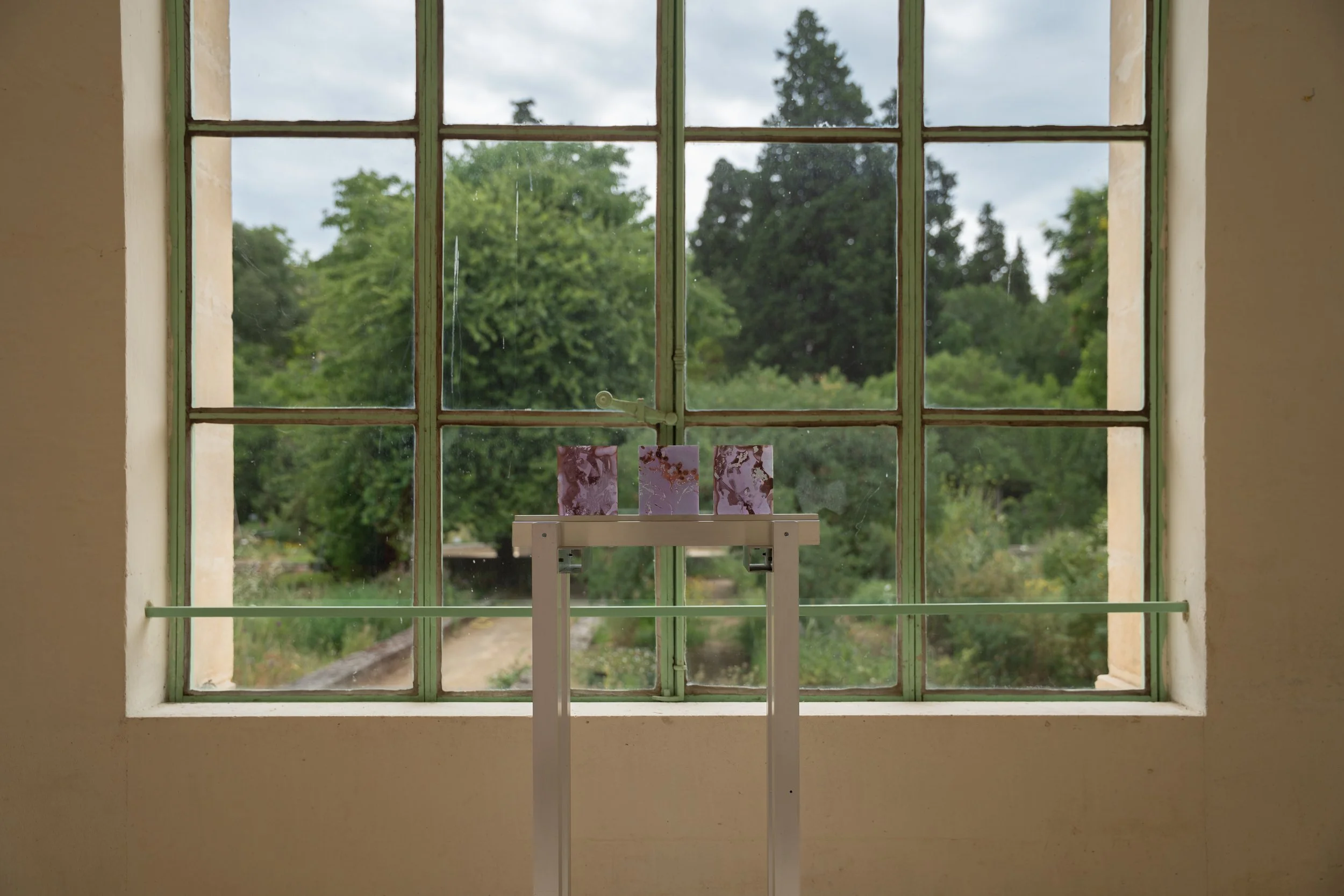
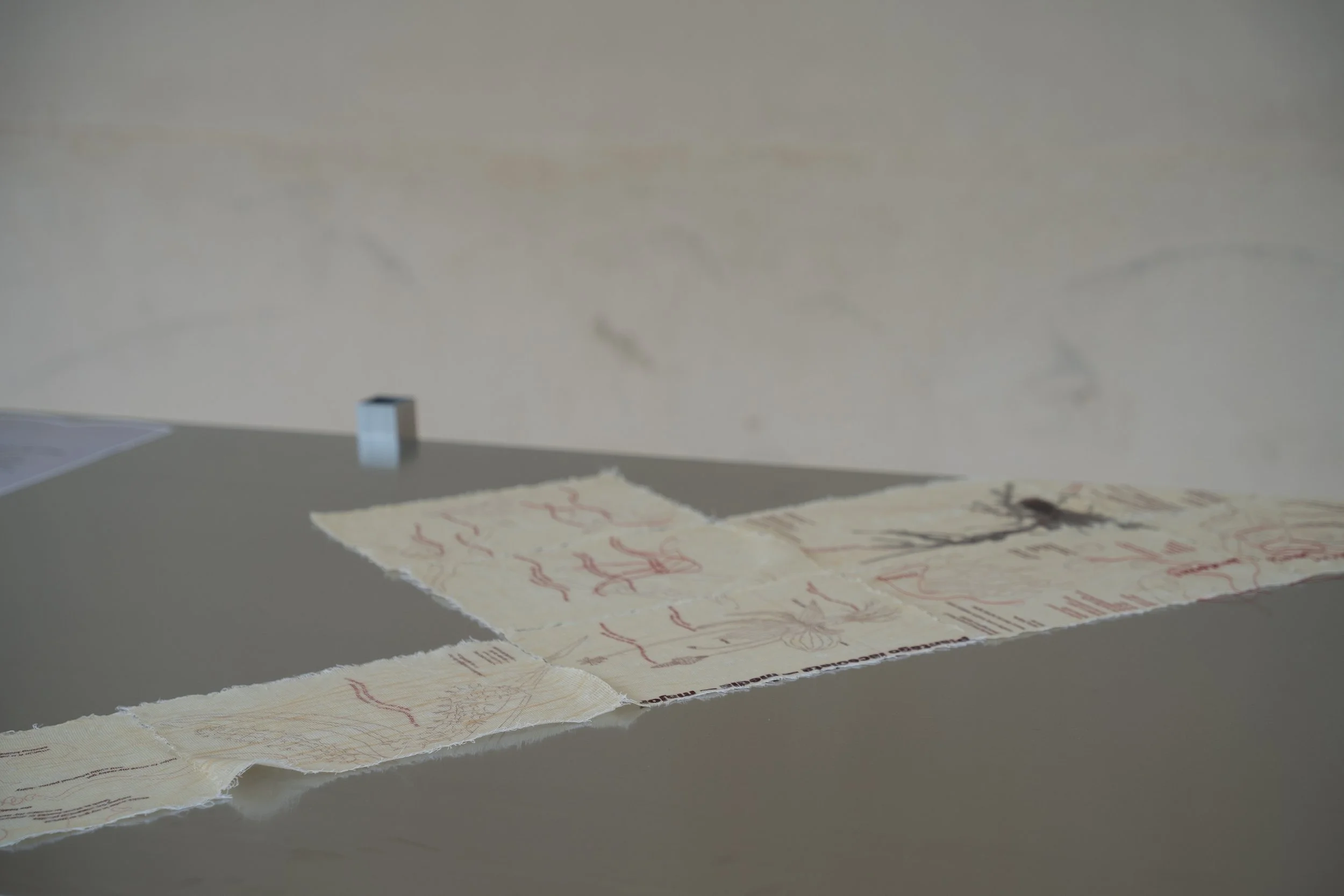
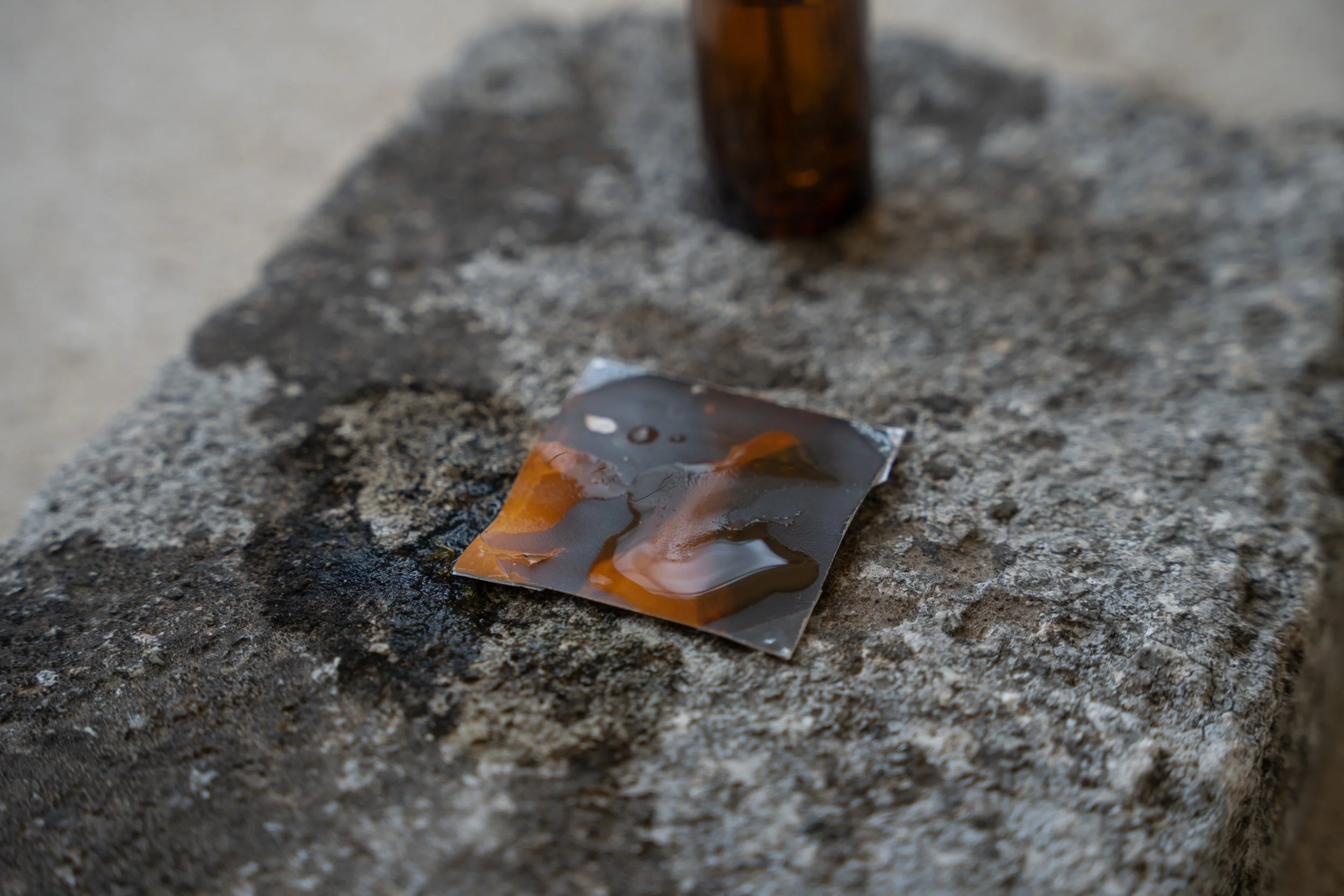
For Every Algae Its Place is a photographic series of paper negatives of the small town of Ísafjördur, located in the mountainous region of Westfjörds, in Iceland, processed with ecological solutions made from aquatic life, such as Fucus vesiculosus. Aimed to create a visual space for intersection and reflection on the ecology of the place by crossing photographic practice with plants existence, this work focuses on the transformations of cycles and the mutation of the landscape, from attentive observation on the territory's inhabitants and their eco-cultural relationships throughout history. Based on the premise that every being has its place, a role in a territory's ecosystem, intertwined and interconnected and in constant transformation, this art work seeks to offer a way of looking at photography through a less industrial approach, allowing the place's agents to speak and show their colors. Created for a site-specific art installation in the town of Ísafjördur, For Every Algae Its Place is now presented as a photo-organic essay that gives voice to the algae that inhabit these lands for centuries, creating space for communicating their ancestral knowledge about the region. This work would not be possible without the valuable input from marine biologist and seaweed farmer Me. Jamie Lee, co-founder of Fine Foods Íslandica. Photography is inherently scientific, bonded to chemistry, botany and geology. Today photography is a vital artistic process to connect Art and Ecology, reconnect humans to more-than-humans and help our climatic transition towards a more sustainable future!
—
Inês Quente (1992, PT) is a visual artist based in Porto. She has a MA in Documentary Filmmaking (UCA, UK, 2017) and a BA in Fine Arts (FBAUP, PT, 2015). In 2025 she was selected to be part of the FUTURES photography community. Inês was granted the PADA bursary (2025) and received the Culture Moves Europe mobility grant (2024). She showcases her work regularly since 2013, both nationally and internationally. Since 2023, she has been developing the arts-based research project They Dream Not through various artistic residencies, and integrated the international research project Free Radicals (2025-2026).
Root Carriers Shuang Xu (Independent artist and researcher)
This research investigates the connections between non-native species and diaspora communities through the lens of multispecies ethnography. It focuses on the intertwined travel histories of the Teochew diaspora and the Artemisia plant, exploring how human and plant migrations intersect. Using a methodology of foraging, collecting and tracing stories of both plants and people, this study draws on ethnoautobiography, reflecting on personal experience to understand broader environmental, historical, and cultural contexts.By examining Asian Mugwort (Artemisia) and its resilience across diverse habitats and climates, the study challenges conventional distinctions between native and non-native species. Simultaneously, research on the Teochew diaspora and the Temple de L'Amicale des Teochew in Paris illuminates the cultural, social, and spiritual strategies that sustain diasporic communities in foreign environments. Encounters with both plants and people reveal enduring connections to homelands, collective memory, and adaptive practices in new contexts.Through interviews and field observations, this work highlights how diasporic communities and non-native species navigate precarity and establish belonging. It emphasizes that resilience, migration, and survival are shared experiences across species, inviting a reconsideration of human-centered notions of ecology and history.By exploring the entanglements of plants and diaspora communities, this research contributes to multispecies ethnography and ethnobotanical understanding, demonstrating how cultural and ecological histories are mutually constitutive. It suggests that acknowledging the movement and persistence of both plants and people can offer new insights into migration, diversity, and human-environment relationships.
Shuang Xu is a multidisciplinary artist and researcher whose work explores cultural narratives, situated landscapes, ecology, craft, food, and migration histories. Her practice is rooted in contexts where plant knowledge, material traditions, and everyday cultivation practices shape relationships between people and their environments. She works with plants, food, and their cultural and material manifestations through socially engaged practices, field research, participatory experiences, workshops, performances, installations, and publications. Her work often highlights the cultural meanings of both native and non-native species, while reflecting on human and more-than-human entanglements with the environment.
Listening Bodies: Sound as method, encounter, and transformation in ethnobotanical fieldwork Lucie Benoit, Independent researcher
This sound installation draws on years of ethnobotanical fieldwork across Russia, the Congo Basin, Thailand, and Malaysia to propose sound as simultaneously a data-collection method, a relational practice, and a witness to personal transformation. Foragers describing how their land has changed, market vendors naming medicinal plants that were still foreign to me, forest atmospheres. What Steven Feld calls acoustemology, knowing through sound, finds unexpected ground in ethnobotanical fieldwork, where a plant's name is never only a name and a healer's voice carries everything the written transcript cannot. What rarely enters the published record is what fieldwork does to the person who carries the microphone. Wonder, disorientation, sometimes grief. These states live in the recordings: a laugh, an hesitation, a tremor of exhaustion. To listen back is to hear human beings, the one who asks and the one who answers, being remade by encounter. These practices came first and only later did words like acoustemology or sensory ethnography, developed by Sarah Pink, appear as recognitions rather than instructions. That knowledge can travel from body to concept, from field to framework: this is what the installation enacts. A short oral presentation opens the experience, followed by a 6 minutes sound immersion drawn from field recordings across four countries, within a sensory space of objects brought back from the field to touch and smell, alongside a visual panel.<br />The recordings that once witnessed a researcher's transformation become, in the space of the installation, a site of transformation for those who listen.
—
Lucie Benoit is an ethnobotanist and founder of the École de la Reliance au Vivant. Her work sits at the intersection of ethnobotany, sensory anthropology, and artistic creation. Her research focuses on traditional edible plants and their cultural uses, with a particular grounding in Borneo, Malaysia. Through arts-based research methods, she explores how sound, touch and narratives can transform our relationship with the plant world. She is deeply committed to sharing plant knowledge with the general public through workshops and training programs. Listening Bodies emerged from her ethnobotanical fieldwork conducted across multiple continents and embodies her commitment to creating spaces where science, art, and knowledge transmission meet to revive our connections with the living world.
Subtropical Ghosts and Memory Potions: Towards Brewing an Affective Archive of Yerba Mate Camila Chebez, Ana Tomas Danuka, Mączka Barbara (The Basel Academy of Art and Design FHNW (HGK Basel), Transversal Design Masters Programme)
How are an energy drink and a disappearing jungle connected? This project follows Yerba Mate (Ilex paraguariensis) across northern Argentina and Switzerland, tracing its archival and photographic legacies to tell a layered story of how this plant has shaped—and been shaped by— green colonialism.
Through the care(full) practices of cyanotype, fermentation and pigment making, art researchers Camila A. Chebez, Danuka Ana Tomas and Barbara Mączka explore Swiss-Argentine institutional archives. The project consists of a dendrochronological floor-piece that acts both as grid and compass for a performative activation by the artists revealing the intertwined histories of landscape engineering, cultural hybridization, and resource extraction embedded in the global circulation of Yerba Mate. Like the rings of a tree, the audience is invited to interact in the growing and making of a new “layer” of the art piece. During the activation, one by one, negatives of the image-archives will be invoked and placed on the sublimated textile ring to reemerge in shifting shades of Yerba Mate green—an invitation to move beyond the prevalent anthropocentric myopia and re-attune to vegetal temporalities as well as the wider ecological bodies that connect us. This work is shared as a Mate-offering to engage with questions of care and renovate our bonds as members of a soil community.
—
Examining links between body and land and our primordial relation to the more-than-human Camila A. Chebez (ARG) focuses on storytelling practices that encompass political ecologies of extraction & ecosomatics.
Spanning from writing, documenting through filmmaking, to the slow process of fermentation Danuka Ana Tomas (CH) works around notions of care, not only for oneself but also for others, to elevate those who are not heard yet.
Through practices of natural pigment-making, Barbara Mączka (POL) investigates how emotional and cultural relationship to color can be reshaped through interactions and lived experience rather than fixed systems.
What Does Asparagus Do? – Making Ethnobotanical Knowledge Felt Anna Tüdős (Free University of Bozen-Bolzano)
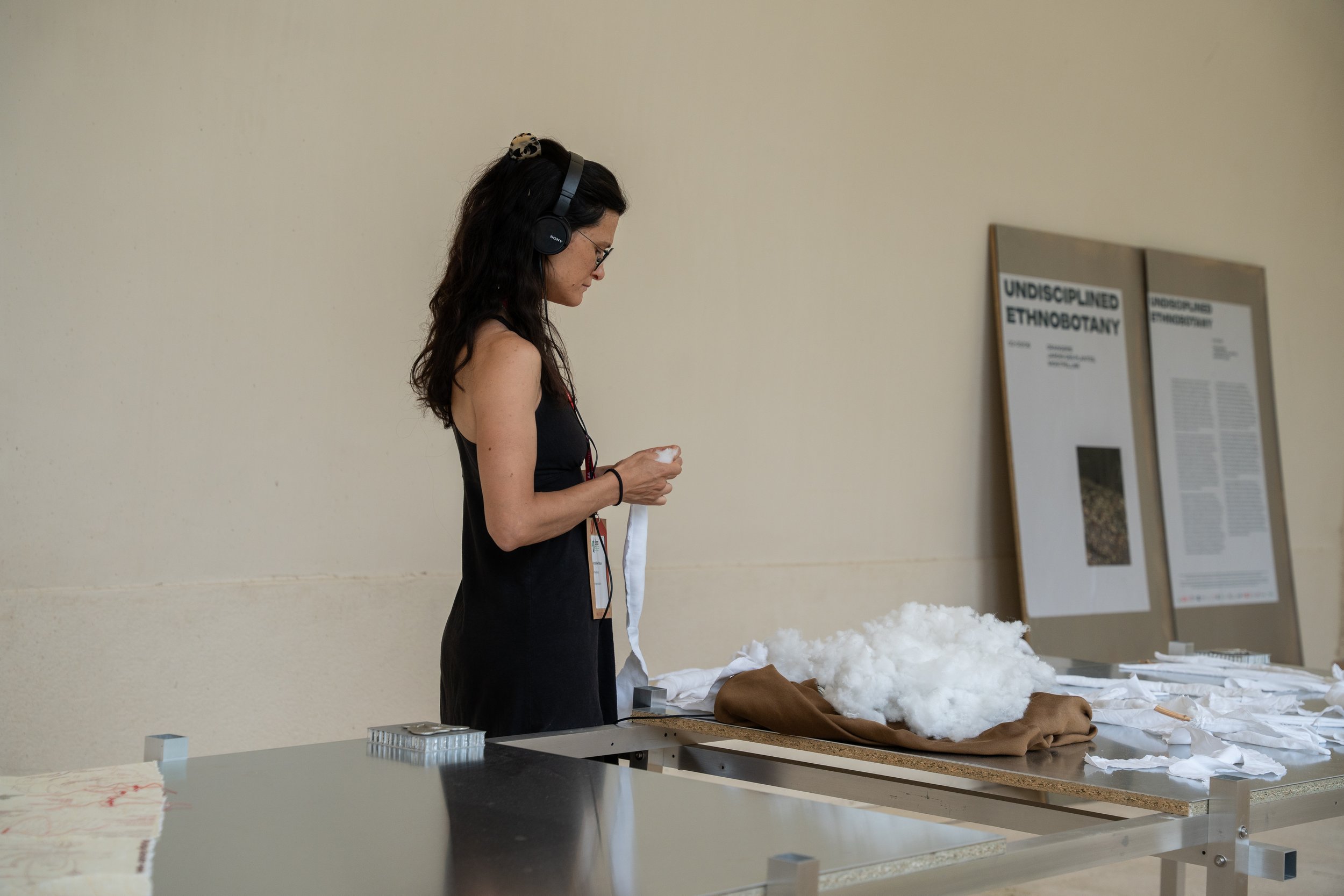
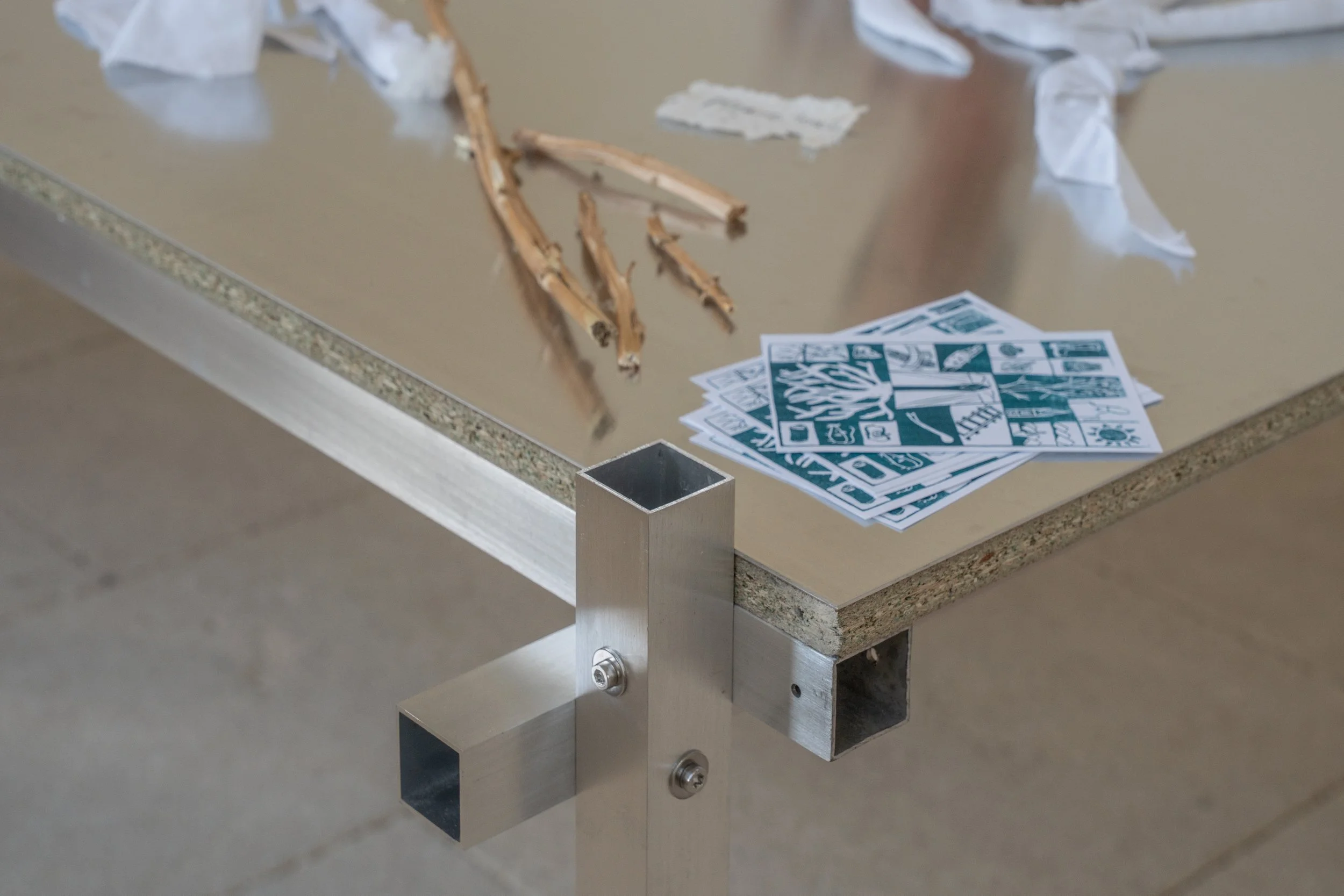
This participatory installation recalls the underground part of the asparagus plant, the “crown”. While widely known as a seasonal delicacy and niche product, the closer examination of asparagus cultivation also reveals less visible dynamics of the plant and its co-development with humans. The asparagus crown and root system has its own agency – it defines plant health, stores energy and is a starting point for “bursting”, sending up shoots in the Spring. It takes the plant years to grow in the initial phase of the cultivar’s life. The piece aims to foreground asparagus not only as spear, which is a crop or delicacy. Instead, it is presented in a form not widely shown, as a living being, part of wider ecological, cultural, and labour assemblages. This root system has been created through participatory crafting: people are invited to slowly extend the fabric roots by turning inside and stuffing additional textile root pieces. This gradual, collective root-building mirrors the long, hidden life of the plant beneath the soil and foregrounds the labour and time embedded in plant growth, cultivation as well as ethnobotanical knowledge-making. The dried sticks, purposefully slowing down the process of turning the fabric strips inside out, are dried-out asparagus stalks. They create a connection between parts of the plant that represent different cycles.
—
Anna Tudos is a Hungarian arts facilitator, curator, social researcher, and programmer of participatory projects. Interdisciplinarity, social justice, and attention to more-than-human worlds are at the core of her practice. She has previously worked with Zentrum für Netzkunst, Ars Electronica, the Scottish Mental Health Arts Festival, and OFF Biennale Budapest, among others. She is currently based in South Tyrol, Northern Italy, for a PhD in Experimental Research through Design, Art and Technologies.
Leaky Pocket Emílie Rážová (Independent artist and researcher)
Medicinal plants rarely belong to a single domain of knowledge. They circulate between bodies, languages, ecologies, and cultures - carrying meanings that are simultaneously chemical, historical, and metaphorical.
The installation proposes an alternative field toolkit which approaches medicinal plants across multiple scales: from phytochemical action within the human body, to ecological relationships with other-than-human, to the linguistic and cultural processes through which plants have been named, interpreted, and used. Plant names encode observation, metaphor, and perceived efficacy - revealing how people historically read a plant's form, taste, and effect. At the same time, plant compounds travel through different bodies, linking organisms through shared biochemical pathways.
Drawing on Astrida Neimanis's concept of transcorporeality, the work understands plant consumption as a moment where chemistry, physiology, language, and place converge.
—
Emilie Rážová’s work moves along the edges of scientific, artistic, and experimental fields—reflecting the spaces she inhabits. Her works draw on ecofeminist theories that unravel the tangled threads of interspecies relationships extending beyond the human realm. Emilie focuses on urban, post-industrial, neglected, and vague landscapes, where she explores the presence and influence of non-human inhabitants and challenges anthropocentric perceptions of space. She navigates the tangibility of lived experience and works with natural fragments, narrative, language, and sound. She lives in and around the Ore Mountains in the Czech Republic.
Iridescent Forests: Plant Intelligence and Vegetal Re-enlightenments in the Pan-Amazon region. Felipe Castelblanco (Basel Academy of Art and Design HGK FHNW) Lecturer, MA Transversal Design. IXDM - HGK Basel
The Andean–Amazon foothills is where plants and humans co-create, communicate, and form unlikely alliances. Together they shape territories, heal, and generate relations that render the forest a pluriversal space of vegetal resistance, mutualism, and shared intelligibility. In this context, artist and researcher Felipe Castelblanco presents three recent experimental films that explore vegetal ontologies through nocturnal plant fluorescence in Peru’s Madre de Dios, plant medicine and speculative fabulation, and the ethnomedicinal potency and toxicity of Brugmansia plants among the Kam'ntšá people of Colombia’s Putumayo region. Combining expanded cinema with participatory research, the films investigate unseen vegetal capacities that sustain biocultural relations and reimagine human–plant coexistence.
Behind the Night / Detrás de la Noche (12:00, 2025)
This short film explores the hidden life of plants after dark, revealing subtle, often invisible interactions between vegetal and other forest beings. Filmed with multispectral cameras deep in the Peruvian Amazon, just below the equatorial line—where day and night are in perfect balance—the film immerses viewers in a shadowed world of vegetal awakening, ecological intimacy, and botanical sorcery, as the forest reveals itself in other spectral registers beyond human sight.
Borrachero Dreams and the Quantic Plant (14:00 min, 2025)
Transported by the powerful Brugmansia plant, an Indigenous man is thrust from the Colombian Amazon to the Swiss Alps, drifting between vision and reality. Known in Colombia as Borrachero Andaki (or Angel's Trumpet across Europe), this trickster plant-sprit guides a disorienting journey through time and space, rooted in the ancestral knowledge of the Kamëntšá people. Blending myth, memory, and ethnomedicine, the film explores Brugmansia’s power to dissolve boundaries and reveal the future—not through sight, but sensation.
The Devil’s Breath (2025, 6:30 min)
This video essay explores the ethnomedicinal practices of the Kamnësnta people living in the Colombian-Amazon region, who still maintain a close relation to a potent plant from the Burgmansia family. Locally known as Borrachero Andaki, the toxicity of this plant has rendered it as a deadly and divine being at once. Ingesting -or even smelling it- can cause severe hallucinations and temporary loss of memory. Nevertheless, this plant is revered among the shamans for enabling those who take it to anticipate the future, not through visions but through feeling.
The film series was realized in the framework of Plants_Intelligence. Learning Like a Plant, a research project funded by SNSF and hosted by IAGN HGK Basel FHNW. Additional Support from Prohelvetia South America, Haus für Medienkunst Oldenburg, Stiftung Niedersachsen, Amazon Aid Foundation, Studio Verde AIR ACEER Foundation and Camino Verde.
—
Dr. Felipe Castelblanco is a Colombian artist and filmmaker based in Basel and a recent postdoctoral fellow at the Institute Art Gender Nature, HGK Basel. His eco-socially engaged practice operates at the intersection of cinema, participatory, and territorial research. Felipe holds an MFA from Carnegie Mellon University and a Ph.D. from the Kunstuniversität Linz and the Basel Academy of Art and Design FHNW. His work has been shown at Haus für Medienkunst Oldenburg, Miguel Urrutia Art Museum in Bogota, the Quebec Biennial, Museum Sinclair-Haus, Helmhaus Zurich, ZKM, the Queens Museum in New York, and the Museum of Modern Art in Toyuan City in Taiwan.
Artistic committee: Denise Bianco (Central Saint Martins / the Alan Turing Institute), Tara Lasrado (arvae.ch), Alexis Loisel-Montambaux (MO.CO. Montpellier Contemporain), Beatriz Manteigas (Quinta das Relvas), Guillaume Odonne (CNRS - LEEISA), Vincent Porcher (IRD - CEFE), Linsey Rendell (Basel Academy of Art & Design (HGK) University of Applied Sciences and Arts Northwestern Switzerland (FHNW)), and Alexandra Strelcova (Haenke; chair).
This work received support from: the French government, managed by the Agence Nationale de la Recherche (ANR) as part of the investment programme France 2030 under the reference « ANR-21-EXES-0005 » ; from the Occitanie Region;and from the ExposUM Institute of the University of Montpellier.